
Hingham Previous Residents by Era
An address history for Hingham takes more than one kind of record. A current parcel creates the modern anchor. The Registry carries the legal transfer trail. Directories, census schedules, newspapers, and local historical files add a dated household layer. Each source answers a different question, so the strongest result is an evidence trail that keeps ownership, occupancy, and historical context separate.
| Source | Years It Covers | Where Held | What It Shows |
|---|---|---|---|
| Vision assessment record | FY2026 values; names and addresses as of January 1, 2025 | Hingham Vision portal | Current parcel, owner name, situs, and parcel ID |
| Registry books and name indexes | Book 1 in 1686 to present; grantor/grantee indexes 1686 to present | Plymouth Registry and TitleView | Recorded instruments, parties, book/page, and plans |
| Hingham plan index | 1890-1965 | Plymouth Registry | Plan bridge for lots, roads, and parcel context |
| Hingham directory holdings | 1885 metadata; selected years 1894-1930 | State Library and local collections | Dated directory appearances and address sections |
| Federal census | 1790-1950 | NARA | A household snapshot at an enumeration date |
| Hingham newspapers | 1827-1976 digitized; 1978 to present at the Library | Newspaper archive and Library | Notices that help date a move, sale, or family event |
| Building permits and street files | Online 2010 to present; early-1980s files in office | Hingham Building Department | Dated property work and related files |
Begin with the assessor and current deed if the address is known now. Start with directories, census, newspapers, or an older street name when the question is historical. No single row supplies a continuous list of everyone who lived at the address.
Hingham Past Residents Parcel Records
Use the Hingham Vision assessment database to search by owner name or street address. Only one is required. When spelling is uncertain, the town advises using the first three or four letters and omitting a street type if needed. Select the result by parcel ID and retain the situs address, parcel ID, and assessment date as the modern reference point.
That record does not prove past occupancy or replace a deed. Its value is practical: it supplies the current naming and parcel vocabulary that can be carried into the Registry. For an older instrument, the same place may be described by lot, plan, estate, abutting owners, or a former road name instead of its current postal-style address.
Hingham Previous Residents Deed Chain
The Plymouth County Registry of Deeds records the legal trail behind a parcel. Plymouth TitleView allows free searching and viewing. Carry the current parcel or situs information to the owner name, latest deed reference, document number, book and page, recording date, parties, legal description, and any linked plan. A deed party is a party to a transaction, not automatically an occupant.
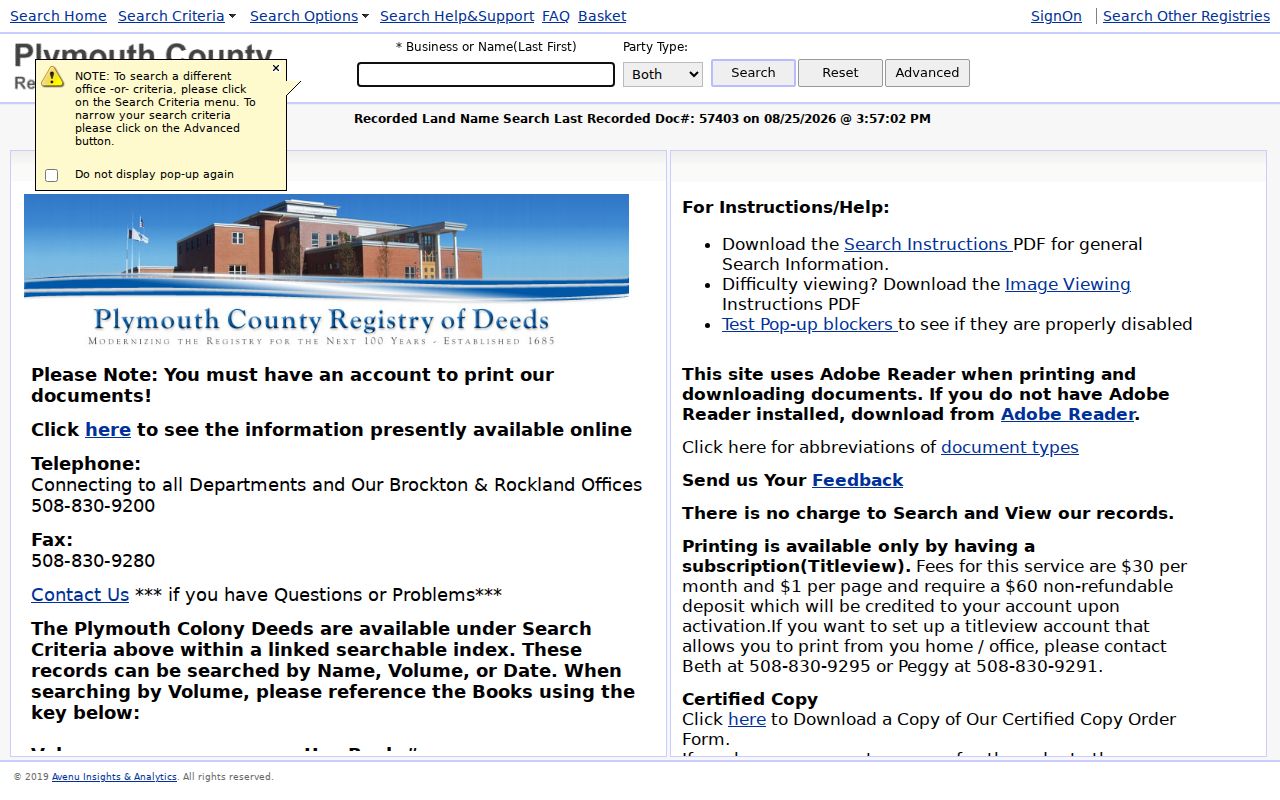
The recorded-land search screen is where the legal chain is assembled. Use the town, party, date, document type, book/page, or plan route to narrow a result, then preserve the identifiers from the image or record view before moving backward.
- Record the current Vision parcel, situs address, and owner name, then locate the most recent instrument that connects that owner to the parcel.
- Capture the document number or book/page, recording date, grantor, grantee, legal description, consideration if shown, and referenced plan.
- Search the prior grantor as a grantee to locate that party's earlier acquisition, then repeat the same capture steps.
- When a deed uses a lot, plan, old road, or abutter instead of the current street, follow that description before trying another address search.
- Label each result by role, such as recorded grantee, recorded grantor, estate, trustee, or abutter, instead of calling every party a resident.
- Grantor / grantee
- The grantor transfers an interest in the document. The grantee receives that interest.
- Chain of title
- The ordered sequence of recorded transfers used to trace a parcel's legal ownership backward.
- Legal description
- The deed's lot, plan, boundary, or other land description, which can remain useful when a street address changes.
Hingham Past Residents Registry Indexes
Older Registry research needs a slower method. The pre-1970 grantor index and pre-1960 grantee index are unedited. Search fewer characters for surname variations, then compare what appears in the printed indexes or original books at Plymouth. Indexed books begin around Book 2393, while Books 1 through 2392 have an unindexed-book route.
The Hingham plan index for 1890 through 1965 is a useful bridge when a deed calls out a plan rather than a house number. Plans are fully indexed from Book 18 and limited for Books 10 through 17. Special plan series can use ST, CTA or CTY, CH, CC, or RR prefixes. A plan, lot, or abutter may hold the key to an earlier record that a current street string misses.
Viewing and searching TitleView are free. Home or office printing requires a $30 monthly account, $1 per page, and a $60 deposit, or an official copy can be ordered. Keep a research log so a needed image can be retrieved deliberately rather than printed repeatedly.
Hingham Previous Residents Street Names
Hingham Harbor history preserves two crucial name pairs: Town Street is now North Street, and Broad Cove Lane is now Lincoln Street. Try both forms in directory, deed, plan, and newspaper searches. A historic document may use the earlier name even when the present parcel and street map use the modern one.
Other early-road terms, including Pleasant, High, Free, Prospect, and Scotland, can be useful search variants when supported by the document in hand. No authoritative source located a comprehensive townwide street-renumbering event, so do not assume that every changed number or spelling reflects one. Compare the plan, legal description, and surrounding parcels before matching an old address to a current one.
Note: Former road names are search aids, not proof that two similarly named parcels are the same place.
Hingham Past Residents House Sources
The Hingham Public Library's Historic Asset Inventory is alphabetized by street and can supply a construction date, architectural style, original resident, map or lot, and MHC documentation. It is a strong way to generate a former surname or date for the next search. The Hingham Historical Society's Julian Loring notebooks cover nearly every historic house and can add a narrative lead.
Hingham Library Materials Guides also point to family, property, plan, will, estate, church, school, business, and correspondence collections. The Hobart, Lane, Lincoln, and Cushing materials are examples of local collections that may connect deeds, plans, wills, or surveys with an earlier address. Use a finding aid or appointment request to learn what is present before drawing conclusions.

These guides provide a house-history lead, not legal proof. Return to the Registry deed chain for the transfer record and cite the library or Historical Society material as its own historical source.
Hingham Previous Residents Directory Trail
Ownership is only one layer of a past-resident search. Hingham directories may place a person in a surname, street, business, or civic section, while a federal census records a household at its enumeration date. The full collection runs and reading cautions belong with the Hingham city directory collections; use them here as dated household evidence rather than as proof of title.
A practical household flow is: directory year and street form, then closest census year, then newspaper result, then the next available directory or street-list year. Search NARA census schedules from 1790 through 1950 by the household information available. Hingham's annual street list is as of January 1, while directory and census dates differ, so changes between them are expected rather than automatic contradictions.
Newspaper coverage offers a further check. The Hingham archive has digitized titles from 1827 to 1976, and the Library has a 1978-to-present newspaper database. A sale notice, marriage notice, obituary, probate notice, or community reference may suggest the next date to test, but it should be recorded as a notice, not an address conclusion.
Hingham Past Residents Permit Trail
Permits can date work at an address, but they do not transform an applicant into a resident. The Hingham permit application and search route supports public searches of existing permits, inspection and sign-off viewing, attachments, and online or in-person payment. Public online listings run from 2010 forward, with an incompleteness warning for 2010 through 2016. Earlier permits and street files are office-only; street files reach the early 1980s.
For older local material, the Town Clerk can research historic holdings remotely or by appointment. The request path is especially useful for a defined street-list, cemetery-lot deed, public-ways, Town Meeting, or other historical record query. Describe the address, approximate time, and source sought rather than asking for every record connected to a name.
The genealogy and historic-record request form captures the record description, requester details, delivery choice, and office processing fields.
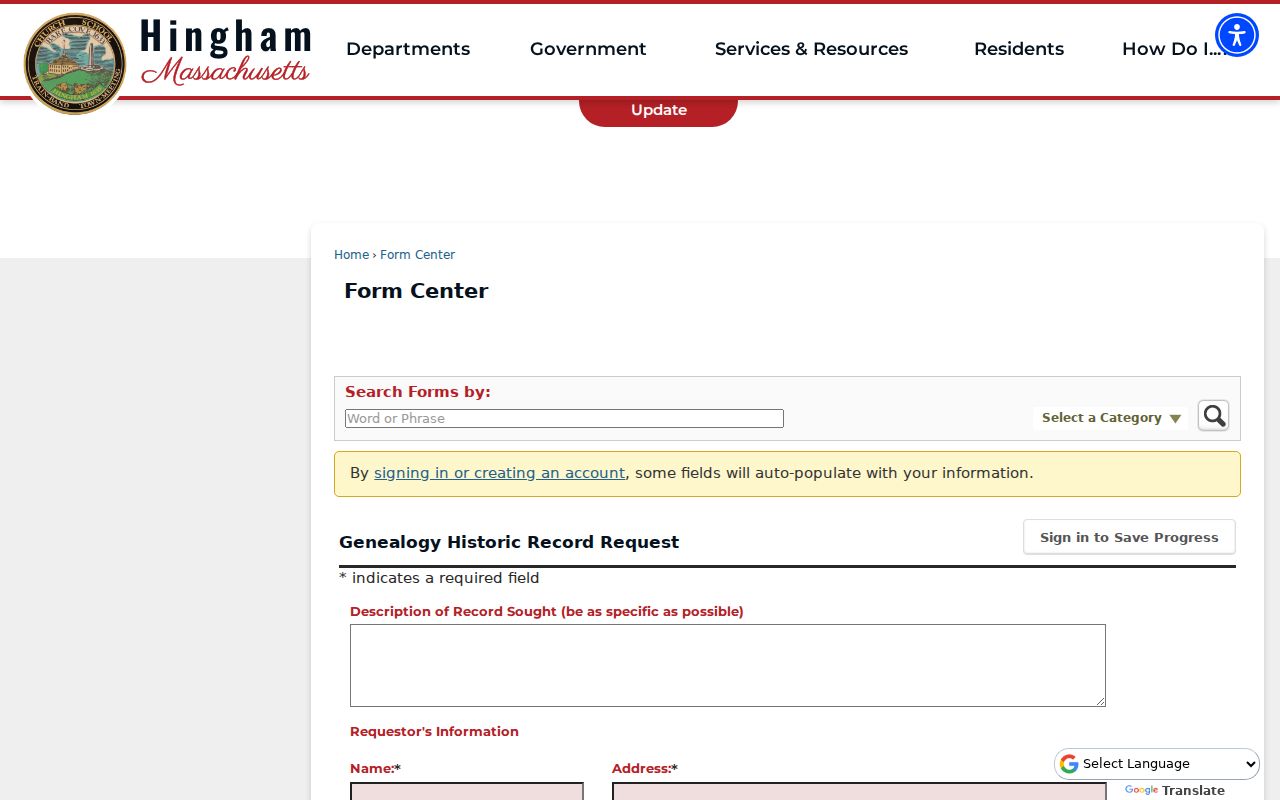
The form is a documented alternative when a record is not in a web index. Onsite historical research has no charge; the Town Clerk lists $25 per surname for remote vital research, up to one hour of remote non-vital research for $25, and 20-cent non-vital scans or prints.
Hingham Past Residents Evidence
A careful trail names the relationship that each document supports. That avoids turning a deed transfer, a tax mailing address, a directory line, or a permit filing into an unsupported statement about who lived at the property. It also makes a future correction possible when a plan, earlier record, or different date changes the picture.
| Assessor result | Current assessed owner, situs, parcel ID, and assessment-date context. |
|---|---|
| Recorded deed | Grantor, grantee, document identifiers, and legal transfer information. |
| Directory or street list | A person or household listed by that publication's date and inclusion rules. |
| Plan or abutter call | Land configuration or a neighboring description, not necessarily a residence claim. |
| Permit or newspaper notice | A dated event or filing that needs its own source label. |
When sources conflict, compare their dates, source roles, street forms, and legal descriptions before choosing the next link in the chain. A well-marked uncertainty is more useful than a smooth but unsupported household story.
Hingham Past Residents Limits
Past-resident research is suited to family history, estate and heir work, property curiosity, and documenting the history of a place. Limit the inquiry to the records needed for that purpose. Respect records with restricted access and distinguish a historic source from a current address.
Lawful use. Hingham house-history research should never be used to track, harass, or contact a living person without a legitimate reason and appropriate care.
The backward trail ends where the evidence ends. If a record remains uncertain, retain the parcel or book/page reference, note the missing link, and consult the custodian or archive rather than filling the gap with an assumption.